BEATING HEART
Independent cafés have always played a vital role in local communities. They are built on familiarity, personality and genuine human connection. While those foundations remain essential, they are no longer enough on their own. In terms of where consumers choose to spend their time and money, coffee quality is now a defining factor.
Our research shows that 85% of UK consumers consider this to be important when deciding where to eat or drink, second only to food quality1. That’s a clear signal of how central coffee has become to the overall proposition.
What’s particularly striking is that coffee’s influence extends well beyond those who actively drink it in cafés. Even among non-coffee drinkers, 70% view its quality as a marker of a venue’s overall standards2.
Today’s café customer is more informed and more demanding. They’re not just comparing one independent operator to another; they’re benchmarking against coffee chains, specialist shops and even supermarkets. Just over half of consumers believe they can get better-quality coffee elsewhere, while 57% say it tastes better in other venues3. This highlights just how far expectations have shifted, and why independents need to respond to remain competitive.
But within that challenge lies a real opportunity. Independents already have strengths that larger competitors often struggle to replicate, such as atmosphere, service and community connection. When you combine those with a high-quality coffee offer, that’s when you create a truly compelling reason for customers to return.

CHANGING EXPECTATIONS
Bean-to-cup coffee is strongly associated with quality, richer flavour and a more premium experience. Importantly, consumers are also willing to pay more for this – typically between 25p and £1 extra4.
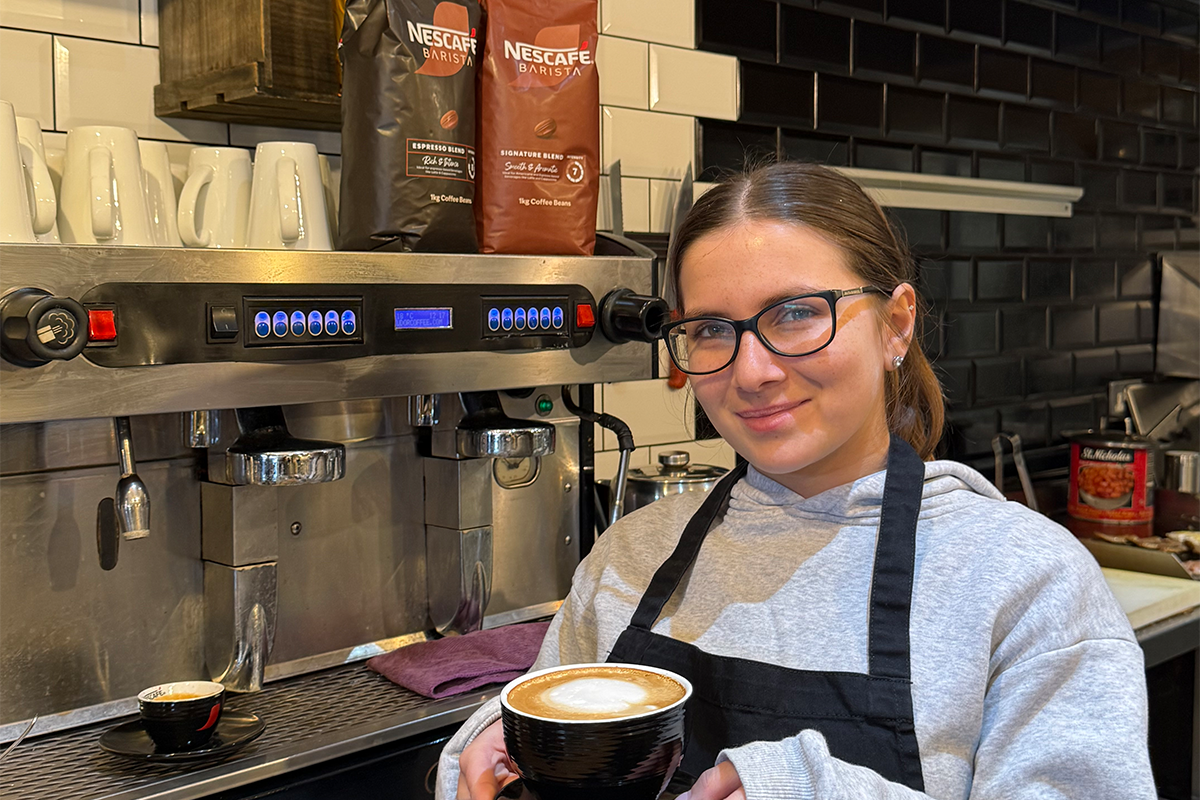
Products such as NESCAFÉ® Barista offer the reassurance of a trusted, recognisable brand, alongside the elevated experience.
What we’re seeing from operators is that bean-to-cup solutions like NESCAFÉ® Barista are delivering benefits well beyond the cup.
At Boodles Café in North Hykeham, Lincolnshire, coffee has overtaken tea by a significant margin, now selling at roughly three times the volume, reflecting a broader cultural shift.
What’s important is that this move has been driven directly by customer demand. Boodles consumers are fans of smoother, less bitter coffee, and when the café delivered that with NESCAFÉ® Barista, the response was immediate.
In the case of Arches Café in East London, the challenge was about evolution rather than transformation. It’s a traditional ‘caff’ with a strong identity, and the goal was to enhance the coffee offer without losing authenticity. As the owner highlighted, customers now expect barista quality everywhere, and that’s become the baseline.
And at Sheila’s Café in London, coffee is now the bestselling item, playing a central role in driving footfall throughout the day. When they trialled NESCAFÉ® Barista, they saw clear signs of increased customer satisfaction, whether through direct feedback or simply in the number of empty cups returned.
Bean-to-cup helps operators deliver quality and value. When you get that balance between quality, consistency and price, you create a strong foundation for repeat visits.

MESSAGE IN A CUP
One of the key themes that comes through strongly is the importance of authenticity. Independent cafés are loved for who they are, their history, their people, their role in the community.
The goal isn’t to change that. It’s about evolving in a way that reinforces and strengthens it. In many cases, upgrading the coffee offer enhances the overall experience, allowing cafés to meet modern expectations while staying true to their roots.
As expectations continue to rise, operators that succeed will be those that recognise coffee is a powerful tool – one that can elevate the offer, strengthen identity and reinforce an independent cafe’s place at the heart of the community.
(1-4): Human8 survey, Oct 2025